

Background
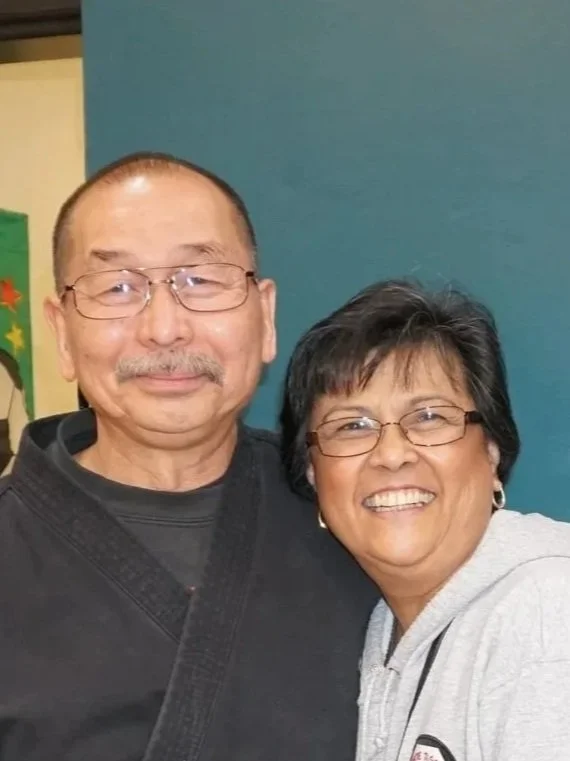
Hi, I am Robert J. Genzo Ito, owner and instructor at ITO’S WHITE TIGER KEMPO KARATE TAI CHI CHUAN. I instruct in the Zen and Tao of Tai Chi Chuan, Kempo, and Karate. My mentors include Grandmaster Bing Fai Lau, Hanchi Paul Yamaguchi, Grandmaster Ming Lum, Professor Imi Okazaki-Mullins, and Grandmaster Mike Young. Philosophical influence can also be attributed to Hanchi Thomas Young, Grandmaster Al Novak, and Mr. Clarence Lee. My weapons training in Filipino arts began with Grandmaster Rene Latosa in 1985.
My first black belt was presented to me by Master Terry Kane. Mr. Terry Kane had a tremendous influence in the way that my school operates. From 1971 through 1983, Master Terry Kane guided me through the process of obtaining my Black Belt (1977) and understanding the business of managing the Kenpo Karate schools in the East-West Karate School system (RLee Inc.) Mr. Terry Kane, President of RLee Inc., taught me the organizational skills and basic requirements needed to take a student from the initial interview to white belt and upward to black belt. In a systematic fashion, he showed me how to run classes, orientations, and seminars to best prepare students for testing and tournament competition. This structured and organized mindset was applied to all elements of a school's activities - from the training mat to the back office.
In 56 years of study and 42 years of instruction, I have awarded 15 black belts. At this time in my life, I really enjoy working with students 7 years and above. My focus is on teaching my students discipline, respect, and self-defense at our dojo ( school).
-
Black Belt Diploma
Awarded the rank of Black Belt from Master Terry Kane, East-West Karate Schools
1977AAU Full Contact Karate Lightweight National Champion
1980
Scroll Presented by Grandmaster Bing Fai Lau
Grandmaster Bing Fai Lau
1999
The well-known Grandmaster Bing Fai Lau had a scroll presented to me after his passing, instructing me to continue his studies in the martial arts tradition, thus naming me as his successor. The Martial Arts Collective Society had awarded this scroll to Bing Fai Lau in 1996, to acknowledge his role in pioneering the martial arts in the United States.Grandmaster Title
Chinese Athletic Arts Academy
February 2007
Awarded the title of Grandmaster “for outstanding dedication and excellence in the perpetuation and preservation of the traditions of martial arts” by Chinese Athletic Arts Academy. The certificate was signed by Professor Randal T Choy, Dean of the Chinese Athletic Arts Academy, and Master Bertram B.N. Chock, Assistant Dean of the Chinese Athletic Arts Academy.Renshi Ryoku (6th) Dan
Paul Yamaguchi, Hanshi
February 2010
I was awarded the rank of Renshi Ryoku (6th) Dan at Lihue, Hawaii, by Hanshi Paul Yamaguchi, the head of Kosho Shorei Shin-Shing Ryu. This certificate includes his personal seal (chalk/stamp).Acknowledgment of the Spirit & Philosophy of Practice
Professor Imi Okazaki-Mullins
Professor Imi Okazaki-Mullins passed on to me a plaque containing the philosophies of practice of her father, Professor Henry Seishiro Okazaki. This was to acknowledge that my traditional spirit of practice was similar to that of her father’s. The plaque was originally presented to her oldest sister at the 8th Annual Shoshinryu Udanshakai Annual Banquet weekend June 28-30, 1991.Master Level 1 Rank in Latosa Escrima
Grandmaster Rene Latosa
2016
Have a Master Level 1 rank in Latosa Escrima. All my training in this art was through private lessons from Grandmaster Rene Latosa. -
In 800 BC, scholar monk masters from Ceylon brought gifts of Ceylon pine and Cypress trees to the holy mountain of Tai Shan in China, as a symbol of their joint Indo-China cultural studies.
James Mitose’s Kosho Shorei Ryu traces back to 1235 AD, it was founded by a monk who, according to legend, meditated under an old pine tree and discovered the meaning of true self-defense. Utilizing proper strategies, the monk could make an attacker undo his own attack in such a way that allowed for both the attacker and defender to remain uninjured. The monk chose a name for this art to reflect its spirit and origins. Hence, Kosho Shorei Ryu, which means “Old Pine Tree School of Encouragement,” was developed.
The 21st descendant of Kosho Shorei Ryu, James (Masayoshi) Mitose, moved to Hawaii in 1936 and taught his art from 1942 until 1946. It is from these early teachings that much of what’s known today as Kempo has developed.
-
Martial Arts Training and Universal Studies
Interested in our Universal Studies? ITO’S WHITE TIGER KEMPO KARATE TAI CHI CHUAN provides the following information to help students better understand Mr. Ito's study.
Universal Studies come from cultural interactions that occurred along the Silk Road, going back to 800 B.C. High cultural and ancient traditions were preserved in writing, record-keeping and translations between Vedic, Sanskrit, Kani and Romanic languages. Universal Studies explore the movement and conditioning of the physical body in a manner that anticipates conflict before conflict arises.
Martial Arts Training and Universal Studies
Interested in our Universal Studies? ITO’S WHITE TIGER KEMPO KARATE TAI CHI CHUAN provides the following information to help students better understand Mr. Ito's study.
Universal Studies come from cultural interactions that occurred along the Silk Road, going back to 800 B.C. High cultural and ancient traditions were preserved in writing, record-keeping and translations between Vedic, Sanskrit, Kani and Romanic languages. Universal Studies explore the movement and conditioning of the physical body in a manner that anticipates conflict before conflict arises.
Universal Elements
3 Powers, Inner-Self
3 Conditions of the Self-Being, Inner-Self
3 Point Objective, Center Pivot
6 Unifications, Senses, Physical Expressions
8 Fold Path
Strategies:
Defend & Counter
Fall 7 to Rise 8Universal Unifications
8 Rounds, Fold Path, 7 Stars, Defend & Counter
6 Senses, Expressions
5 Gates, Diagonals
4 Elements, Directions of Motion
3 Disciplines, Powers, Inner-Self
2 Yin Yang, Dual Studies, Join, Connect
1 Unification Study, Flow, Balance, HarmonyUniversal Exercise
5 Gates
State of 2 poles—6 Universal Contact Points
5 Diagonals
4 Motions
4 Crossing Guards, 9 Universal Contact Points
8742 Universal Squats
3 Centered Bases
10 Count Exercise
6 Physical Expressions, Self DefenseUniversal Tai Chi Chuan: Ito's White Tiger Kempo Concepts
3 Disciplines of the White Tiger Universal Studies
1. Human Self
2. Human Social Interaction (Community)
3. Natural Environment of StudyUniversal Guide
Vajrayana—Physical & Inner-Self
Yoga Cara—Static & Motion
Universal Exercise—Uniform & Balanced,
8 7 6 5 4 3 2 1 Flow
Katas & Tai Chi Chuan—Start End Same, Balanced, Unified, Harmony
4 Directions of Motion, 7 Stars, 8 RoundsFoundation of White Tiger Universal Studies
3 Conditions of the Self-Being (Clear, Calm, Relaxed)
3 Universal Power Sources (Heaven, Earth, Human)
4 Universal Elements (Air, Water, Wood, Earth)
4 Universal Actions of Motion to the Human Body (Form, Change, Logic)
4 Universal Energy Centers to Stimulate the Human Body for Fitness & Well-Being
4 Universal Energy Centers for Collection & Disbursement in Fitness, Well-Being, Self-Defense, Healing (Hard Energy) (Always Moving, Not for Storage)
5 Universal Energy Centers for Collection & Disbursement in Fitness, Well-Being, Self-Defense, Healing (Soft Energy) (5 Elements)
7 Universal Leverage Points of the 7 Stars to Human Body
8 Universal Round Actions of the 8 Rounds to the Human Body
Ready to Start Your Journey?
Send us a quick message, and we’ll set up a free intro class—no experience needed.